
Sunday, June 2, 2013

Wednesday, May 29, 2013
Paul Williams Tribute Issue: PKD Otaku

"We ought to remember, here in our PKD niche, that Paul
was multi- faceted. He is certainly going to be
best remembered by the public as a music journalist, a genre he essentially created with his magazine Crawdaddy. To his friends and family, of course, his memory will run much deeper. He was a journalist, true; he was also a husband, father, brother, son, colleague and friend. That he was a good friend to a California science fiction writer named Philip K. Dick was a lucky accident for both of them – and for us. I like to think that, somewhere, Paul and Phil are sitting around a kitchen table, fiddling with a tape recorder, listening to Moby Grape on the stereo, talking about the universe and life, reality and what passes for reality; relaxed, laughing, enjoying each other’s company once again and maybe forever."
An excerpt from the editorial on Paul Williams in the new
PKD Otaku Issue 28
by Patrick Clark
* * *
"On my shelves are 13 volumes of Theodore Sturgeon’s Short Stories. They wouldn’t be there if it wasn’t for Paul Williams. It was his mis- sion to do for Sturgeon what he had previously done for Dick (he men- tioned as much in the later PKDS Newsletters). He began the Sturgeon project before his ac- cident, but tragically was not able to write the story notes for the last two volumes ‘Slow Sculpture’ and ‘Case and the Dreamer.’ The whole set being eventually published sequentially, volume by volume, be- tween 1994-2010. It was Paul who dreamed it. He succeeded. I treasure the stories and I am grateful to Paul for making these beautiful volumes possible."
An excerpt from Nick Buchanan's tribute in PKD Otaku
An excerpt from Nick Buchanan's tribute in PKD Otaku
* * *
I never met Phil, so I made it my mission to meet Paul. Once I had decided (in the late 90s) to write a novel with Philip K. Dick as my “Guide to the Other Side” I soon learned that Paul was the Key Master to the PKD Gate. His name was turning up everywhere. He had been the first
one to sort through the massive Exegesis pile of papers and devised the manila folder organizational system. At that time access to the Exegesis was as elusive as an an- cient codex. Lawrence Sutin’s In Pursuit of VALIS had only whetted my appetite in my search for what was “really real” for Phil. I was convinced I had to read more.
Another book I found early on was Welcome to Reality: the Nightmares of Philip K. Dick (edited by Uwe Anton with an introduction by Paul Williams.) This guy again, I thought. The open of his intro is particularly eerie now:
(Paul Williams) "Many years ago (I was 20 years old) a close friend of mine died, a young writer for a New York news- paper. After the funeral, about ten of us... gathered in a nearby apartment and talked about our friend who was gone. As we talked it was like he was still there, not just the memory of him, but his actual presence, so real it amazed me. I realized at that moment that we live on not only in our own bodies
but in the conscious- ness of the people we’ve touched, all the people who have truly felt our pres- ence in their lives. This was not an idea I had but an obser- vation—I could see, feel, and hear my dead friend alive in that room.
“In 1982 another good friend of mine died, the writer Phil- ip K. Dick. The per- sonal loss for me was great—no more late
night phone calls, or talking enthusiastically with him in his southern California apartment while he sat with twenty different cans of flavored snuff in front of him, taking a pinch from each can in suc- cession. But because I’m also a writer, I found my- self worrying about all the brilliant work Phil had done that hadn’t been published yet... I realized, perhaps instinctively or perhaps guided somehow by my dead friend’s spirit, that the way to keep Phil alive... was to gather the people who loved him, who had been touched by him, and in whom he still lived... his readers. So with the support of his heirs, his children, I started the Philip K. Dick Society.”
An excerpt from E.J. "Jami" Morgan's piece in PKD Otaku
Saturday, May 25, 2013
Sound of the Big Bang, Giant Orbiting Mirrors, 15 Kilometer Towers, And Download Ships...

On Monday Alexander and I visited Paul's oldest dearest friend, David Hartwell, an editor at Tor Books, at the La Jolla Shores Hotel for dinner. David had told me about this trip to San Diego over 3 months ago and we had hoped he would be able to visit his friend one last time, ..alas.

La Jolla Shores boardwalk at dusk. David was in town for a symposium at the new UCSD Arthur C Clarke Center for Human Imagination. On Tuesday and Wednesday there were panels and lectures on all kinds of cool crazy stuff, the agenda offered talks on: Starships and the Fates of Mankind, Noah's Ark Eggs and Warm Blooded Plants and more wild sounding titles.
I was able to talk Alexander's teachers into letting him ditch school for a day so we could take in a day of physicists and science fiction authors at the Starship Century Symposium. They agreed so long as he
could tell the class a bit about what he'd seen and heard.
Alexander: "Most of the talks were pretty interesting. Not all of them were about building a starship, like the talk on a 15 kilometer tall tower, but they all seemed really interesting, and it showed how we'd have to advance in technology a lot for these things to become real. Like, for example for the starship, we'd need to advance in rocket engine technology instead of using old rocket fuel. Nuclear-thermal rockets were talked about. For the tall tower an advancement would be how to keep the steel from buckling and also how to keep the wind velocity from knocking it down-using things like jet engines to push back the high winds."

Thanks to David Hartwell and Gregory Benford, we were able to get passes to the sold out event. Gregory is a science fiction author and an astrophysicist and a long time friend of Paul's via the sf community. He had this to say about Paul Williams
at File 770
“He was a stone sf fan from junior high, deflected into rock, but with the instincts of a fan and the smarts to see where rock could go, following the curve of sf and jazz and earlier American inventions. His kind of cross-conversation invigorated all fields he touched, from Dylan to Sturgeon to Phil Dick to all those idiosyncratic visionaries who lurk among us, bless them all in their fevered pace.”

Talking to SF writer Allen Steele

In front of the Theodore Geisel (aka Dr Seuss) Library UCSD

This is Freeman Dyson on the right, he is an influential physicist, a free thinker and visionary and his talk on what it would take to move us outside of this solar system was colorful and mind-expanding. Images that stick with me: plants that grow on ice, sail-starships, eggs that contain DNA for life and are made for terraforming planetoids, sleep-ships (like in 2001 Space Odyssey) vs "download"-ships which contain human-cloned DNA, and giant mirrors orbiting distant planets-far from the sun- which are able to reflect enough light onto that world to make it 'habitable'. Not only that, ...Dyson is 90 years old.
Dr. Jon Cramer is seen here on the left, he's a Professor Emeritus in the physics department of the University of Washington (and in fact, knows Alexander's grandfather, Bob Williams, who was also a physics professor at UW). David Hartwell very thoughtfully, brought Dr. Cramer around to meet with and talk to eleven year old Alexander. He told us about his recent experiments and discoveries including the sound of the beginning of the universe.
Alexander on meeting Dr. Cramer: "It was pretty cool that I could understand some of what he was talking about, like the Quantum Entanglement Theory, which is about two particles being linked together and being able to send messages back and forth between those particles. However I did learn some new things such as being able to send those messages back in time. It was pretty cool that I could meet and talk about these things with him."

The after-after party, with me and Gloria B. Lubkin from
Physics Today
All photos by David Hartwell,
except the photo of me and David and Greg, which is merely my iphone
Saturday, May 18, 2013
May 19th
Paul's birthday, May 19, 1948....


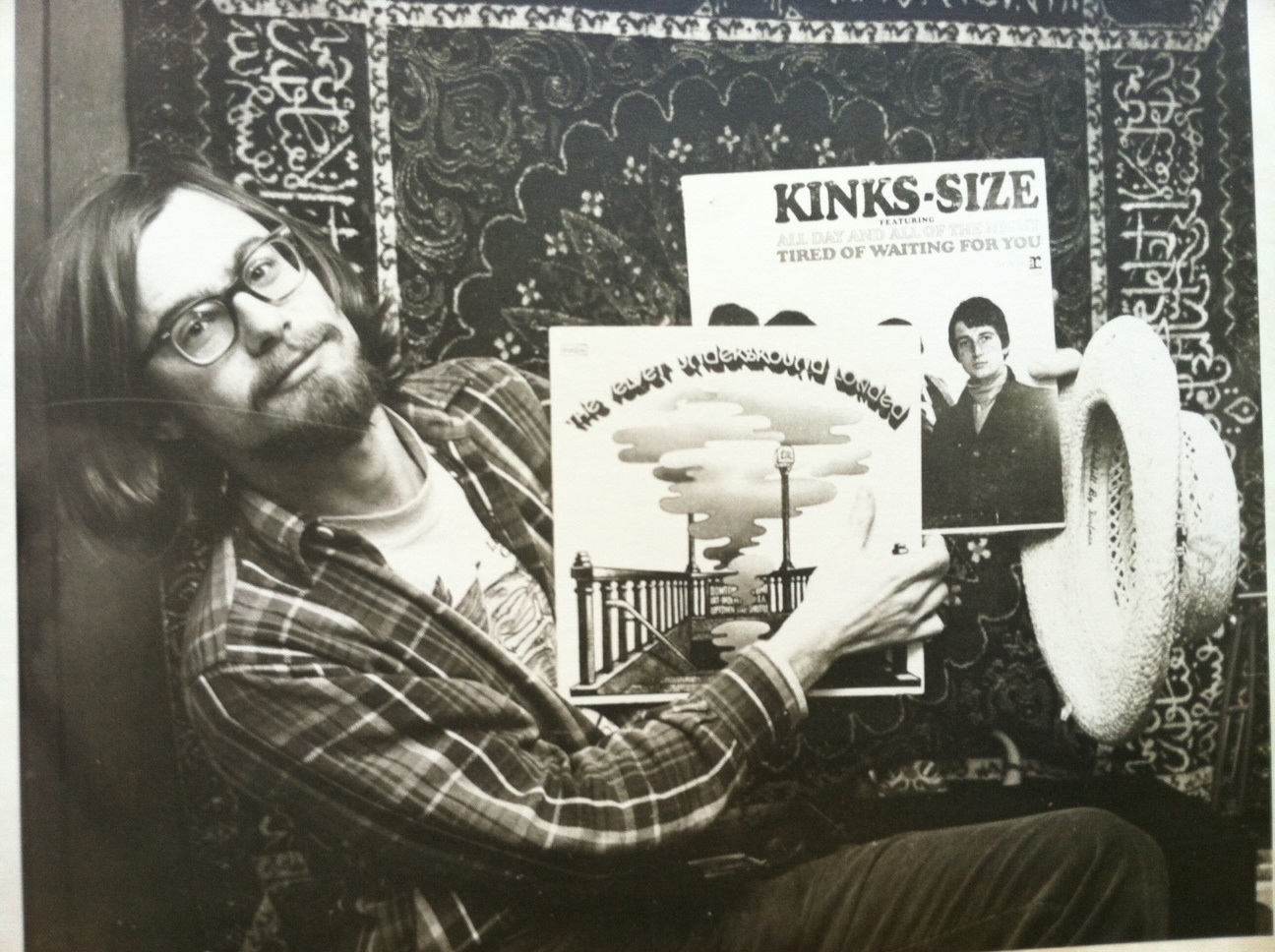

I just stumbled upon 2 big files full of Paul photos I've never seen these before. I'm thinking they are from mid 70s, must check w/Sachiko on that.
*
This business of grieving and also gettin' on with one's life is challenging. You still got ta work, you still must have a social life, you still got to pay bills.
And what about that list everyone refers to, the stages of grief; denial, anger, bargaining, depression, acceptance. I'm not sure if I'm in anything different now than I ever was. However, I do catch myself suddenly, now and then, quite unexpectedly and rather like a sunny-day-down-pour, crying my eyes out.
It happened two weeks ago while driving up to Los Angeles. I was listening to a song on Stew's album The Naked Dutch Painter, I think the song is called Angel Dust. At any rate, some songs-at the right time-hit a funny bone and -boom- there I was sobbing my eyes out passing the controversial San Onofre Nuclear Power Plant, and wondering if I could drive through the crying or if I'd have to pull over. Then as sudden and surprising as it started, it ended, and I drove on, safely arriving at my destination.
I don't know how it's supposed to work, but nothing about my experience with my own emotions has ever been about rules. They are mysterious, unavailable alot of the time, need a little time and coaxing, and are not predictable. And if there is a difference in the way men and women experience feelings, I don't really see it. I have seen both men and women use their emotions to manipulate or get certain reactions from others. I've seen stonewalling. But I think we are all in the same soup of trying-to-figure-our-own-selves-out together.
Vaughan Bell, a psychologist at King's College London says research shows that "we all grieve in our own way."
[P]sychologists have a sad tradition of seeing loss through their own cultural blinders and inventing supposedly "universal" theories. Even more regrettably, many have been at the forefront of encouraging people to think of their grief as having to conform to certain stages, feelings or phases to be considered "normal". Mourning has been framed as a problem, pain as something to be cured.
The idea that grief has specific stages is a popular belief and was given its most professional gloss by the Swiss psychiatrist Elisabeth Kübler-Ross, who is often cited as suggesting that mourners pass through stages of denial, anger, bargaining, depression, and acceptance. Not being able to "work through" a stage was considered a sign of psychological difficulty and therapists were encouraged to help people pass through each of the "phases". The fact that Kübler-Ross was talking about adjusting to your own impending death, not to the death of someone else, didn't seem to dull anyone's enthusiasm and her theories became wildly over-applied. But regardless of how accurately her ideas were used, the evidence for these stages evaporates under scrutiny — perhaps unsurprising considering they were based on little more than casual observation and creative thinking.
In contrast, psychologist George Bonanno has studied the course of grief by following people from before they were bereaved to months and even years afterwards. It turns out that there is little evidence for a progression through specific stages of adjustment, and even the belief that most people are plunged into despair and gradually "get better" turns out to be little more than cliché. This is not to say that sadness isn't a common response to loss, but an experience of deep debilitating anguish tends to be the exception rather than the rule. In fact, two-thirds of people are resilient in the face of losing a loved one — in other words, they are sorrowful but they are neither depressed nor disabled by their experience.
It is worth noting, however, that about 10% of people do suffer what is sometimes called "complicated" or "prolonged" grief, where the feelings of loss are intense, long-lasting and cause significant impairment, potentially needing help from mental health professionals. But in terms of the traditional concept of grief, most people experience their loss differently, something both important and liberating, in a sombre sort of way. We are left to wonder how many people have been stigmatised as being "in denial" because they are not experiencing what stereotype expects, or worse, have had their affection for their loved-one questioned due to their normal and non-catastrophic reactions.
Wednesday, May 15, 2013
San Diego Concert For Paul Williams

Gary Warth called me about a month ago and said he wanted to help with the expenses of Paul's memorial and funeral, so he called upon some San Diego music friends and put together last weekends benefit

Lots of folks showed up. I had no idea what it might be like on Mothers Day afternoon, in a bar for 6 hours, but it was a fun!

Me with Jared Whitlock of the Coast News, and Randy Hoffman

The smooth and demented stylings of Jose Sinatra, singing the lyrics to Elvis' Houndog to the music of Sounds of Silence

Jose (seen here in predator mode), Kent and Liz Abbott from the SD Troubadour

My pal Nena Andersen bailed me out of some trouble when I locked my keys in my trunk...she had AAA


Playing Ring of Fire w/Randy Hoffman, me, Nena and, Keli Ross-Ma'u playing a solo on steel drum

The true beauty and sonic stylings of the Hoffman *cardboard box* can not be explained by mere words. One must experience it live.

The inimitable, Mojo Nixon... proclaiming Elvis is Everywhere and why one must Tie a Pecker To Mah Leg

Photographer Dennis Andersen photograph by Dan Chusid

Great music, great friends, lots of laughs and heartfelt words about Paul Williams' contribution to pop culture and music criticism. And then after the music was done, Gary Warth made me take the spoils of the benefit home with me, a total of $1600.00.
Wow. Thank you San Diego, I'm proud to call you my home.
Tuesday, May 14, 2013
1994


Paul joined me on the second half of a 1994 tour. We drove from New York City to Chicago where I had a show at Schuba's. Before the show we met with a few friends and one, Yael Routtenberg, took our photograph. Paul had just moved to Encinitas around this time, I had just released Garage Orchestra and all was good in the world.
Thursday, May 9, 2013
PaulStock
'PaulStock'-article on benefit in UTSanDiego
Here's a link to an article on this weekends 'PaulStock'...which is a benefit concert organized by the good people of the San Diego music community. This is great, gonna be fun, and will help me pay for the funerary costs and memorial.
Thank you to Gary Warth, George Varga and everyone that is playing the show Sunday. I will see you there...
This Sunday May 12th 2pm
Winston's
1921 Bacon St.
Ocean Beach, CA
With: Mojo Nixon, Jose Sinatra & Miff Laracy, Bart Mendoza’s True Stories, Cindy Lee Berryhill, Berkley Hart, Ric Kaestner, Jon Kanis & Listening to Rocks, The Jive Bombers
Wednesday, May 1, 2013

Wednesday, April 24, 2013
Adams Ave. Street Festival
Adams-Avenue-Unplugged
Music Festival
This Saturday April 27th
CLB @The Kensington Cafe

2:00-3pm
w/Randy Hoffman on percussion
and Paula Luber on vibraphone

There's a lot of good stuff going down at this festival, if I were you I'd make a day of it. Right after my set and on the Kensington-Library stage next-door is legendary Boston folk-musicians Geoff Muldaur and Jim Kweskin. And later on Gregory Page, Nena Andersen, Steve Harris, Sara Petite and lots of other great songwriters and musicians
And, it's free...
Wednesday, April 17, 2013
The Midnight Hour
"The midnight hour is the timeless place, where man and woman meet (enemies in the daylight), where dreams take form, the soil, the source, the land of passion and possibility. All friendship has its roots there. In the midnight hour you can talk to presidents and kings, Bob Dylan, Beethoven, Amelia Earhart is there, everyone will take you for what you are, there are no barriers. This is a real place everyone has been to many times. I'm going to hold you in my arms in the midnight hour."
-Paul Williams, Rock and Roll: The 100 Best Singles


-Paul Williams, Rock and Roll: The 100 Best Singles

Rodin (of course)
On the morning of March 27th Alexander and I woke up in Brooklyn in the home of Stew (Passing Strange, The Negro Problem) my pal for many years. We'd been there for several days already and I made plans over the phone with Lenny Kaye for us to move to his place late afternoon. So, out of Brooklyn, a lovely place to stay right on Prospect Park. The night before we'd met Stew at Barbes' a cool and arty music venue just below Park Slope and saw the very melodic and soul expanding Marika Hughes play cello, sing, with her band of friends. We came out to the rising of the nearly full moon.

That night after the concert I got a call from Paul's dear and longtime friend Judith Bragar, it was she that came to us during Paul's hospital stay in February and suggested we look into, just consider, hospice. And she happened to work for hospice. She and Paul met when they were teenagers, school mates, he at Browne and Nichols (and she at it's sister-school for girls) in Cambridge. They were friends and later lovers and then friends again. Now she was his hospice friend. That night she called and said she'd been with Paul for several hours and it looked to her like he may be "transitioning". That meant his breathing had changed. I'd read about that in the hospice pamphlet and online.
Alexander was already asleep so I waited to talk to him in the morning. "Your dad is getting close now. We could try to get a flight back this morning... What would you like to do?" He told me he was afraid of seeing his dad like that. I understood. He'd already seen so much, day after day, the deterioration of his dads health. Well, really for years...We walked across the park, me in a daze, what should I do? I talked to Paul's oldest son, Kenta, who lives in the Bay Area (not far from his slightly younger brother Taiyo. Their mother is Sachiko Kenanobu). He thought he could get a flight that morning and get down to Encinitas around noon.

Alexander and I ate breakfast, then we caught the train into Manhattan and did the thing we had planned to do. We met my actor friend Ken Jacowitz at the Metropolitan Museum of Art. He led us in. It was all a terrible blur to me at this point. Ken offered to take Alexander around the different floors and rooms of art. I sat on a bench between Greek and Roman statues, texting family members, waiting to hear if Kenta had arrived at Paul's side and talking to Paul's nurse about how he was fairing. It was odd, surreal and timeless, this place with the marble, the statues and the heart-ache. Ken was a a very good friend through all this, entertaining an 11 year old whose father was dying three thousand miles away.

Finally I got a call from Lenny Kaye, he'd arrived in the city and we met up with him downtown, hopped in his car and took a ride over the bridge and back into Brooklyn to pick up our bags and food and stuff. I gave him the update on Paul, by now Kenta was by his side, keeping me posted by text. Lenny pointed out the old building on Flatbush Ave. that used to be the home of Murray the K, (a radio personality that helped usher in Beatlemania), passing through some neighborhoods of his youth. We got our stuff and rode back into Manhattan, it was dark by now. Lenny, Alexander and I heaved the bags upstairs and made a bee-line to the local BBQ joint.

What can I say, Lenny was the perfect person to be with on such a night as this. I already knew Lenny when I met Paul (he'd produced my second Rhino album) and I still remember telling him, "I've met this great guy Paul Williams from CRAWDADDY! and I think I'm in love" and Lenny said "I can't think of two people I like more and now you're together, that's great". Lenny would get me and Paul into Patti Smith shows over the years (he's the guitarist), and Patti was always so respectful and kind and warm to Paul.
I thought I wouldn't be able to eat, I was pretty much a mess. I just needed a shoulder to lean on and cry on. Lenny ordered me what he got and somehow my appetite came back. Time was moving in strange ways, sometimes it was going fast in a blur, and other moments seemed to stretch really long. Someone was being loud and drunk at the table near us, it seemed forever for them to go.
Lenny's place was stocked with anything Alexander and I would need to feel comfortable and at home for several days. Alexander watched some TV and I was on the phone. Somewhere in there, maybe an hour and a half before Paul passed, Kenta and I tried a Facetime, with our iPhones, so that Alexander and I could talk to Paul. It worked, we saw him, and heard the rapid scary breathing. It had only been 4 and a half days since I'd seen him last and he looked very different, emaciated. Kenta said Paul had not moved all day. Alexander said hello and we told Paul how much we loved him and how beautiful the exhibit of his work had been a few days earlier at the Boo-Hooray Gallery in Soho. How thoughtfully the curator Johan Kugleberg had put the books and the papers and the letters altogether, how lovingly. And how many visitors at the show were astounded by how much Paul had written (and the exhibit didn't show it all). The other news I had for Paul was that two very impressive libraries were interested in taking his books and papers, thanks to the shows curator. A single tear came from Paul's eye, Kenta remarked, and I knew then that Paul understood his life's work would be cared for, that it was now in safe hands, in a place accessible to the readers of the future.
Finally Kenta said that Paul's breathing had changed. The rest of this is Kenta's story with his father. By 1:35am eastern standard time I received a text from Kenta that Paul had taken his last breath. Alexander had fallen asleep mere moments before, so I waited to tell him the next morning. The moon was at it's fullness, it shown crazy bright, through the filmy curtains, moving gently . I lit a candle. I said a prayer. I felt his presence. I didn't sleep til dawn.

Alexander wasn't surprised his dad had passed, we talked about it over breakfast. "Sometimes I thought he was faking it," he said. What do you mean, I asked? "I just thought that maybe he would get better, that maybe he was just pretending to be getting worse". I said I sort of understood that feeling. And told him when my mom died of cancer, when I was eight, that I'd made up a story, that I'd believed for years, that she had been an archaeologist on a mission to dig up old bones and ruins and had contracted Valley Fever.
We walked by the St. Marks Church and saw that their would be a ceremony that night for Maundy Thursday, the Thursday before Easter, the night of Passover dinner. So we went. This felt right. We were staying right around the corner from the church where Paul and I had played a show together back in 1993, he reading from Rock and Roll: The 100 Best Singles and me singing songs that he'd inspired. Not to mention that this had been the venue for one of Lenny and Patti's first shows together, or the place many beloved beat poets had read their poetry aloud to deep listening ears. I love this place, St. Marks Church. And in the nights ceremony we washed one another's feet and drank wine and broke bread and sang some melodies and uttered some words. And through it all I felt Paul's spirit, his energi, his unbound self, rise and lift and move from that limited encasement called the human body.
Deo pro vobis
What do you want Paul? "..want to go up in the sky"
What do you mean? "Good music goes up"
Subscribe to:
Posts (Atom)